What is Himalayan Balsam?
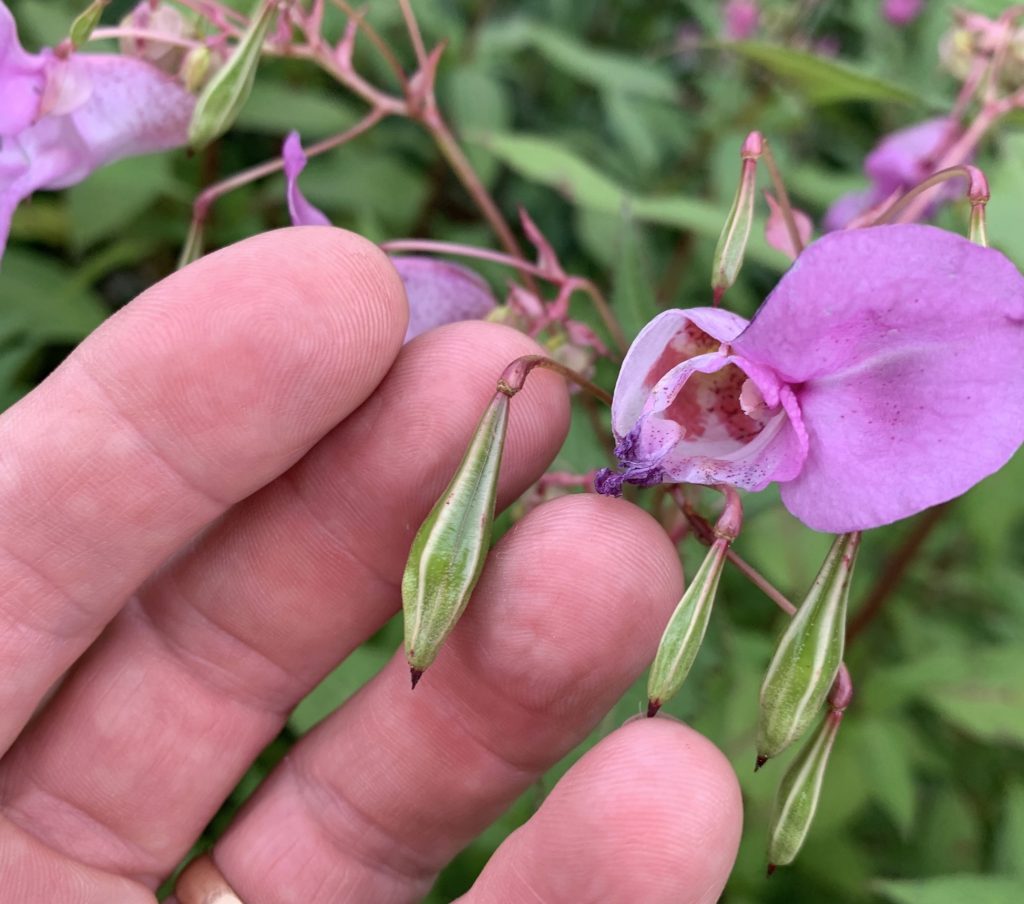
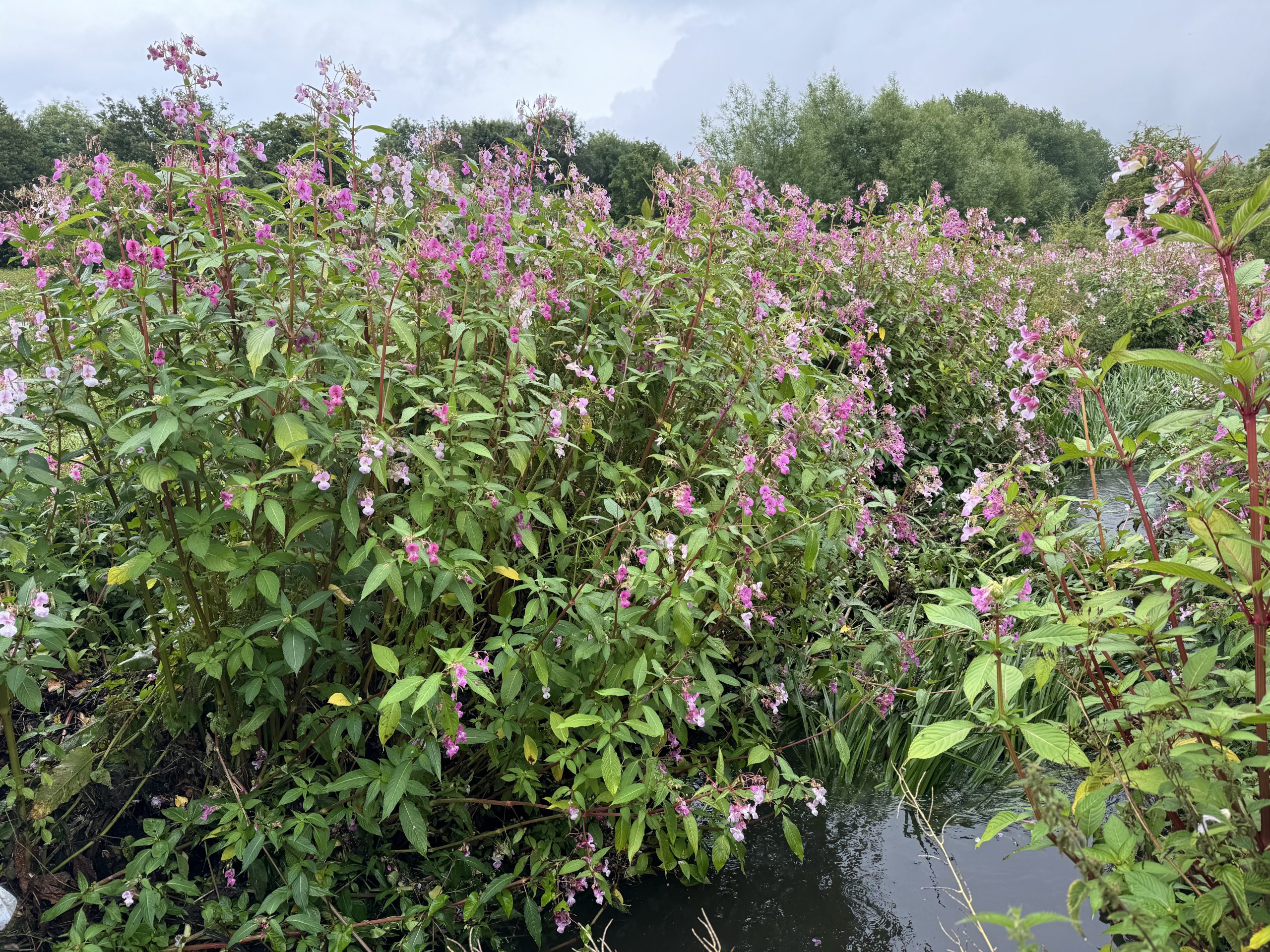
Himalayan Balsam is a very invasive flowering plant. The name gives a clue: it should be growing in the Himalayas and it’s not native to Britain.
It was introduced to the UK by Victorian plant hunters and for many years remained as a pretty garden flower.
But, it spreads rapidly from seed, loves damp places and grows really well next to rivers, canals and ditches. In recent years Balsam has expanded exponentially along most river systems and urgently needs to be brought under control
Why’s it a problem?
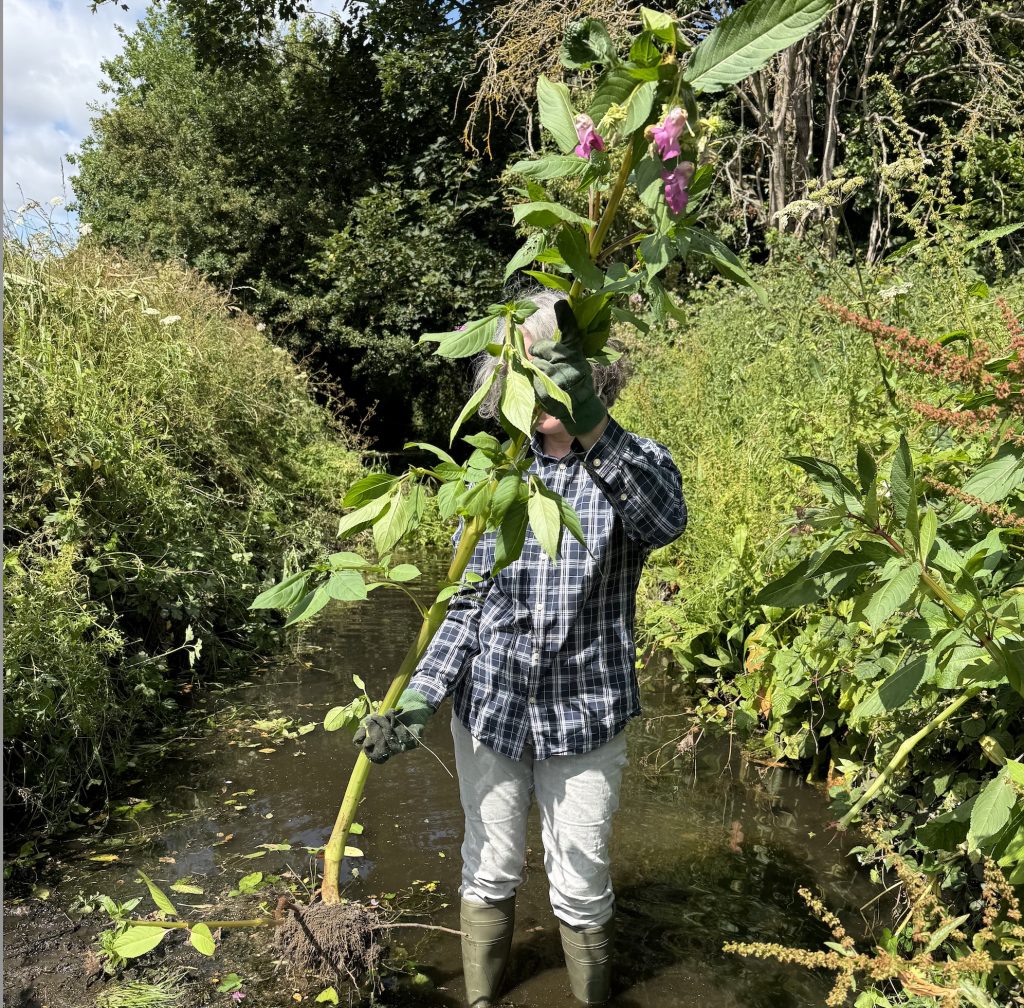
Himalayan Balsam is the fastest-growing annual plant in Britain, reaching up to 10 feet tall in one year from a tiny seed. It grows so fast it outcompetes and shades out native riverside plants.
Then, after flowering, it produces huge amounts of seed that spread rapidly, especially near rivers as they float, carrying the problem further downstream every year.
Come autumn it dies back completely, leaving exposed bare soil. As this soil is unprotected by the roots of native riverside plants that should be there, it washes away in winter rains causing siltation of the riverbed and sweeps away habitat such as water vole burrows.
The following year an even greater amount will grow up from the seeds dropped by the previous year’s plants – a spiral which can lead to a total monoculture of invasive Balsam at a site in just a few years.
What’s the solution?
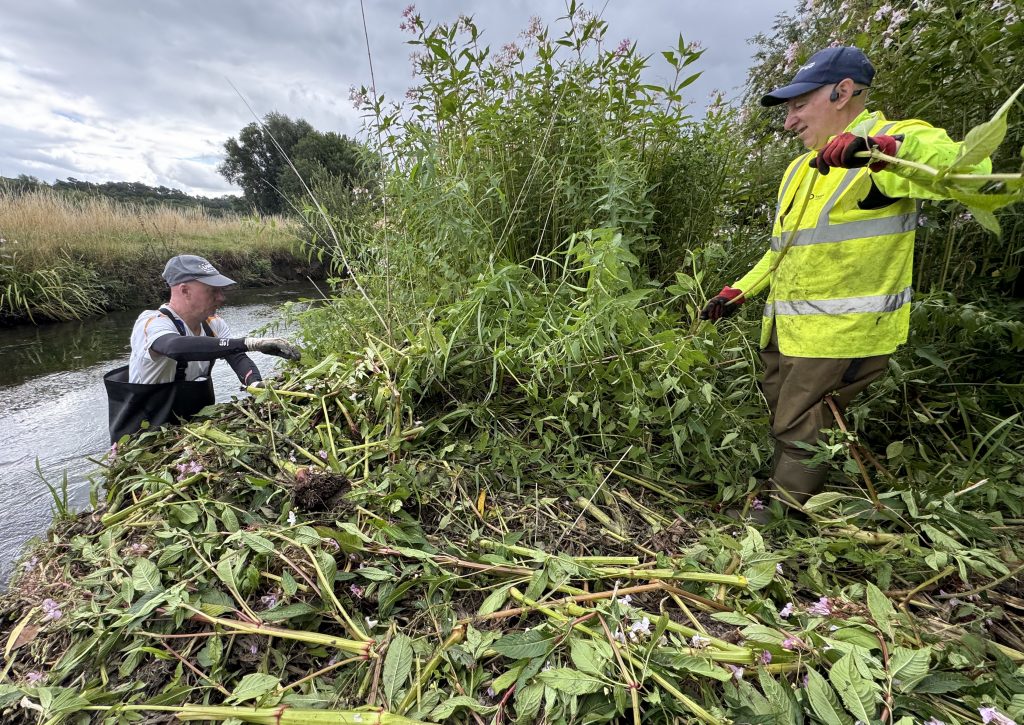
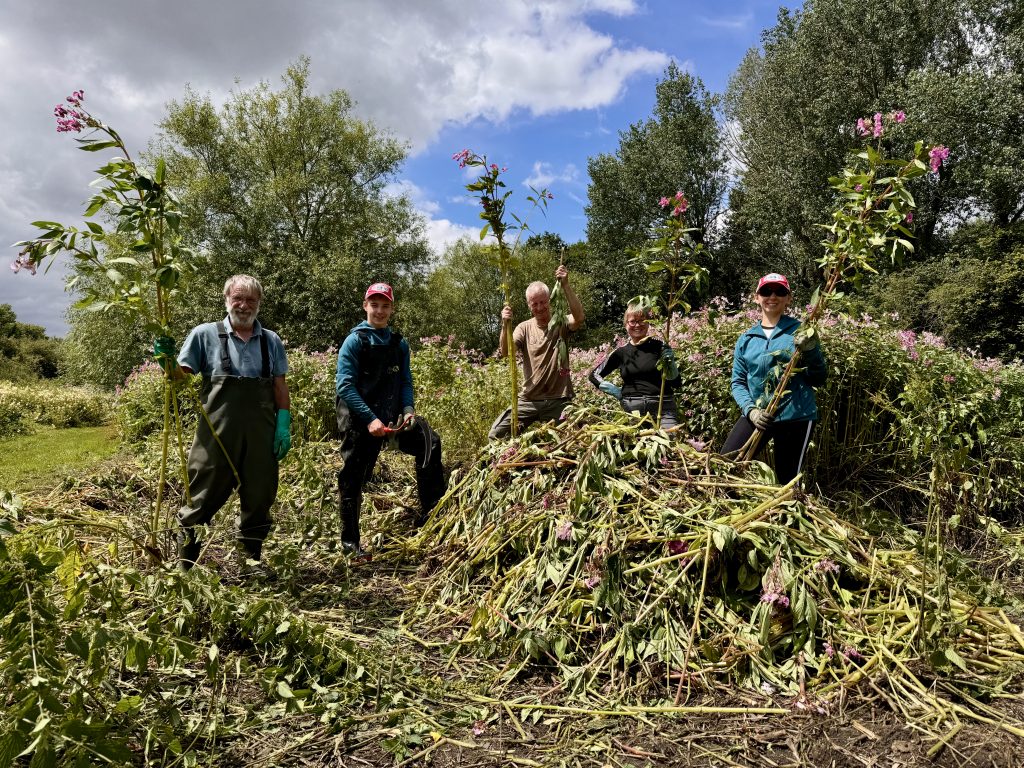
The most effective solution is to simply pull up the plants by hand before the flowers fully develop and so prevent the seeds from forming, and so becoming new plants shooting up next year.
Balsam has shallow roots and tends to grow in the softer silts and sands of the banks, meaning it is very easy to uproot.
Once pulled, if ‘scrunched up’ and left on dry ground away from the river it wilts and then rots away very quickly. Unlike some other invasive weeds, it doesn’t readily regrow from these pulled stems.
We aim to pull plants during late Spring and early summer, before they set seed. A return visit later in the year is useful to catch any that spring up as a second flush.
It’s never possible to get to all the plants at a site in one go, but by repeating these pulls two or three times a year over a handful of years, it can be brought under control and maybe even eradicated from a site. (It’s not quite that simple: some seeds ‘sit’ dormant in the soil for a year or two before germinating, which is why it takes a few years to manage)
Why should you try it?
Balsam Bashing is great fun and it’s easy to do! If you don’t want to get wet, there’s always plenty up on the banks in the dry.
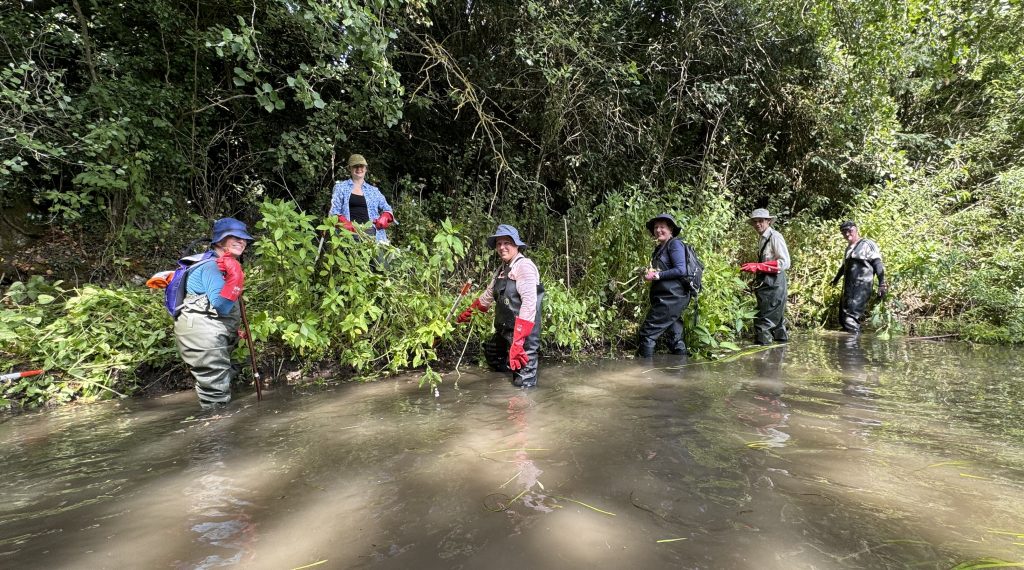
But, if you want to rediscover your inner child, then grab a pair of wellies, or borrow some of our waders, get in the river and really get stuck in!
It doesn’t take much effort, uses no tools, and at the end of a session you really can see what’s been achieved. The river will thank you.
Fancy coming to help?
We run volunteer sessions to pull up Balsam thorough the late Spring and early Summer each year.
If you’ve not already signed up to help, pop over to our ‘Keep in Touch‘ page, tick ‘Interested in Volunteering’ and we’ll get back to you.
Already signed up? Great! Watch your inbox in Spring and Summer for dates of upcoming sessions. And keep an eye on our Facebook page too for updates during the summer.
Footnote: Himalayan Balsam is one of several invasive, non-native species (INNS) of plants listed in Schedule 9 of the Wildlife and Countryside Act. That requires it to be contained and controlled to prevent further spread. Giant Hogweed (that is also often found alongside rivers) is also listed in Schedule 9. The RBRA has a trained and licensed team for Giant Hogweed control along the River Beane system.