
Why does the Beane turn brown after heavy rain?
If you’ve walked along the upper reaches of the River Beane after heavy rainfall, you may have noticed the water looking cloudy or brown.
It can be worrying to see a normally clear chalk stream discoloured like this. But in many cases, what you’re seeing is soil run-off from surrounding farmland. And while it isn’t ideal, it is often temporary.
Why does this happen?
The upper reaches of the River Beane flow through a largely rural and agricultural landscape. Fields border many stretches of the river.
After periods of heavy rain, particularly in winter, rainwater can wash soil from fields into nearby streams and rivers. This is known as soil run-off.
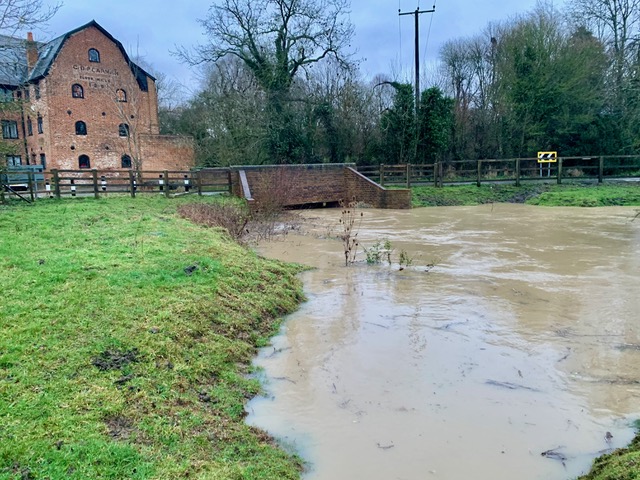
The effect is more noticeable at certain times of year:
After fields have been ploughed
Before new crops have established strong root systems
During prolonged or intense rainfall
When crops are young or fields are bare, the soil is more exposed. Without established roots to stabilise it, heavy rain can carry fine particles into the river. This is what gives the water its muddy appearance.
Is it pollution?
Seeing brown water can understandably raise concerns about pollution.
In most cases in this area, what you are seeing after heavy rain is sediment (soil) rather than chemical contamination. The river usually clears naturally once rainfall subsides and flow levels settle.
That said, sediment entering rivers is not without impact. Excess soil in waterways can:
Smother gravel beds used by fish for spawning
Reduce light penetration
Affect aquatic plants and invertebrates
So while the effect is often temporary, reducing soil run-off remains important.
Do I need to report it?
If the river turns brown following heavy rainfall, and there are no signs of chemical discharge, dead fish, or unusual odours, you do not normally need to report it.
However, if you notice:
Milky, grey, or oily discolouration
Strong smells
Foam that persists
Signs of fish distress
those may indicate something more serious and should be reported to the appropriate authorities.
What’s being done?
We are working with local farmers and land managers to reduce soil run-off into the River Beane.
This work includes collaboration through organisations such as FWAG (Farming & Wildlife Advisory Group), which supports farmers in adopting practical land management approaches that benefit both agriculture and the environment.
Measures can include:
Improving soil structure
Planting buffer strips near waterways
Managing ploughing direction and timing
Increasing winter ground cover
These approaches help keep soil where it belongs — on the fields — and out of the river.
How you can help: become a Mudspotter
Our team of trained Mudspotter volunteers plays an important role in this work.
Mudspotters:
Monitor sections of the river
Record sediment levels
Help identify patterns after rainfall
Provide valuable local observations
This data helps us work constructively with farmers and partners to reduce soil loss over time.
If you care about the River Beane and would like to play a practical role in protecting it, you’re very welcome to join us.
Do you have more unanswered questions about the River Beane? Come and read the answers to our FAQs.